When War and Peace Collide
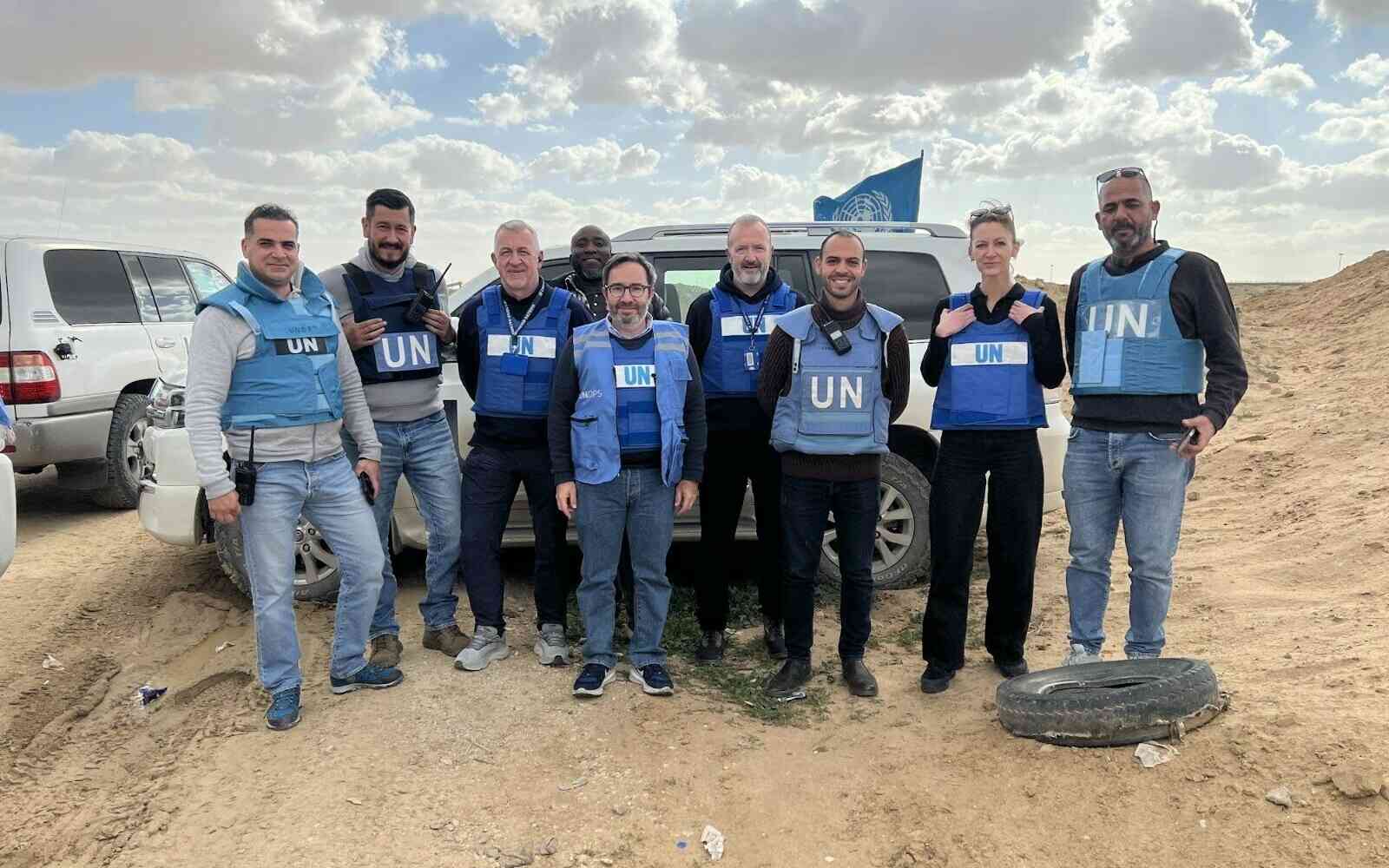
April 24, 2025 - Earlier today, the Israel Defense Forces (IDF) acknowledged responsibility for a March 19th tank strike in Deir al-Balah, Gaza, that tragically resulted in the death of a Bulgarian aid worker affiliated with the United Nations Office for Project Services (UNOPS) and injuries to nine others. According to the IDF, the strike was based on a misidentification during a high-pressure operational environment. The site, later identified as a U.N. guesthouse, was not recognized as such at the time of the incident.
The situation underscores the extraordinary challenges that arise in densely populated conflict zones, where both military and humanitarian actors operate under difficult and often unclear conditions. The IDF has committed to investigating the circumstances and improving procedures to avoid similar outcomes in the future.
International organizations, including the United Nations, have voiced concern over the growing risks to humanitarian personnel in conflict areas. In response to safety concerns, some humanitarian staff have been temporarily relocated. While these decisions are made to protect lives, they also present significant obstacles to aid delivery in regions facing urgent humanitarian needs.
Across the globe, aid workers operate under the shared goal of providing relief and stability in times of crisis. Since the beginning of the current conflict in October 2023, hundreds of these workers have been affected. Their work of bringing food, medical care, and hope is a testament to international cooperation and the values that underpin democratic societies.
As a Political Affairs Intern and Ambassador for The Borgen Project, I’ve spent the past several months advocating for a strong, strategic U.S. foreign policy that supports humanitarian efforts and long-term development. These priorities aren’t just about compassion, they’re vital to American interests. By supporting international aid and ensuring the safety of those delivering it, the United States helps stabilize regions, prevent the spread of extremism, and reduce displacement that can lead to broader geopolitical consequences.
In moments like this, our role as a global leader is critical. U.S. foreign aid and development funding reinforce our values and our national security, while promoting peace, prosperity, and accountability on the world stage. The safety of humanitarian workers is not a partisan issue it’s a reflection of how we uphold our global commitments as a nation.
The events in Gaza are a solemn reminder of the complexities of modern conflict and the need for careful diplomacy, operational precision, and continued humanitarian engagement. Let us use this moment not to assign blame, but to recommit to the ideals of peace, partnership, and progress.
To learn more about supporting U.S. foreign policy that advances humanitarian goals while improving national security and economic stability in the United States visit borgenproject.org.
Max Kurzweil is a junior at Muhlenberg College, class of 2027, pursuing a double major in Political Science and Business Administration. He previously served as a Political Affairs Intern and Ambassador for The Borgen Project, where he supported initiatives focused on poverty reduction and sustainable development as part of a balanced approach to American foreign policy and global engagement. He will begin serving as a Regional Director with The Borgen Project in January 2026.


Comments
Post a Comment